Description
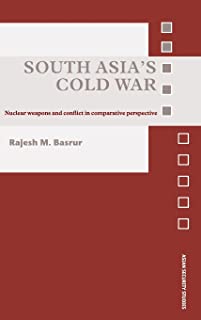
Drawing on nuclear rivalries between similar pairs (United States-Soviet Union, United States-China, Soviet Union-China, and United States-North Korea), the work examines the rise, process and potential end of the cold war between India and Pakistan. It identifies the three factors driving the India-Pakistan rivalry: ideational factors stemming from partition; oppositional roles created by the distribution of power in South Asia; and the particular kind of relationship created by nuclear weapons. The volume assesses why India and Pakistan continue in non-crisis times to think about power and military force in outmoded ways embedded in pre-nuclear times, and draws lessons applicable to them as well as to other contemporary nuclear powers and states that might be engaged in future cold wars.
 Applied Soils and Micromorphology in Archaeology 1 × ₹2,694.07
 ARM-based Microcontroller Projects Using mbed 1 × ₹4,320.11
 Applied Iterative Methods 1 × ₹12,062.40



Reviews
There are no reviews yet.